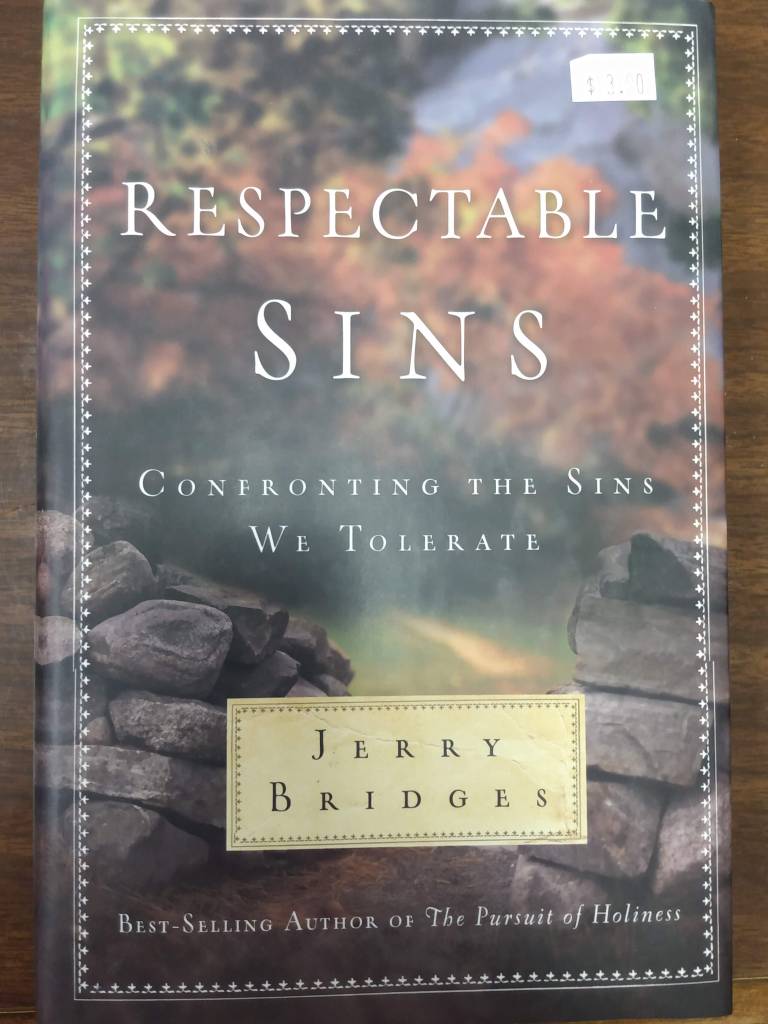
Having given us the bad news in chapter three, Jerry Bridges is ready to give us hope for our sorry condition. He begins the chapter by telling the story of John Newton. Once upon a time, Newton was a slave trader and a captain of a slave ship bringing Africans to the Americas. But the Lord rescued Newton and made him a minister. Newton renounced his old way of life but never forgot the depth or severity of his sin. The grim realities of slavery weighed on him for the rest of his life. Bridges shares a quote from near the end of Newton’s life: “My memory is nearly gone; but I remember two things: that I am a great sinner, and that Christ is a great Savior.” Herein lies the remedy for the malignancy of sin: Christ is a great Savior. This is the message that Bridges counsels us to apply every single day.
“The remedy for our sin, whether scandalous or acceptable, is the gospel in its widest scope. The gospel is actually a message; here I am using the word gospel as a shorthand expression for the entire work of Christ in His historic life, death, and resurrection for us, and His present work in us through His Holy Spirit. When I say the gospel in its widest scope, I am referring to the fact that Christ, in His work for us and in us, saves us not only from the penalty of sin but also from its dominion or reigning power in our lives.” This is good news: the work of Christ deals with both the guilt and power of sin.
Bridges reminds us that we must remember what Christ has done and preach it to ourselves habitually. “Using” the gospel by reminding ourselves of the work of Christ helps us in three ways:
The first use is “to plow the ground of our hearts so that we can see our sin.” The gospel is only for sinners, and so preaching the gospel to ourselves is about getting rid of all the ways that we evade our sin.
The second use is to free ourselves to face our sin openly. “To the extent that I grasp, in the depth of my being, this great truth of God’s forgiveness of my sin through Christ, I will be freed up to honestly and humbly face the particular manifestations of sin in my life.”
The third use is to motivate us and energize us to deal with our sin. Our motivation to fight sin comes from our gratitude that Christ has already saved us and the encouragement that we receive from our loving Father.
Because Christ has already died for us and rose from the dead, the guilt of our sins – even those “respectable” sins with which we struggle – has already been dealt with. We are already adopted into God’s family in Christ. Next time, we will consider the Spirit’s work in us to free us from the power of sin.
Can you give an “elevator pitch” of the gospel message? What elements should be included? How have we as contemporary Christians sometimes missed the heart of the good news? In other words, what have we focused on which falls short of the Biblical presentation? What are the implications of the necessary elements for your life? Consider writing down your elevator pitch on a notecard and reading it every day.
This is the third in a series of reflections on Jerry Bridges’ Respectable Sins.
According to Bridges, we should think of sin as we think of cancer. And lest you and I respond to this comparison as flippant, Bridges shares that he himself has experienced the ravages of cancer firsthand, losing his first wife during a year-long bout with the vile stuff. Like cancer, sin can spread inside of us undetected, and our own sins can even “metastasize” to those around us. The Puritans understood the dire realities of sin, and Bridges shares a series of book titles illustrating their opinion of sin:
The Sinfulness of Sin
The Mischief of Sin
The Anatomy of Secret Sins
The Evil of Evils or The Exceeding Sinfulness of Sin
I think you get the point. And the battle with sin is not just for the non-Christian. Bridges: “Now, here is the unvarnished truth that we need to lay to heart. Even though our hearts have been renewed, even though we have been freed from the absolute dominion of sin, even though God’s Holy Spirit dwells within our bodies, this principle of sin still lurks within us and wages war against our souls.” Paul calls the indwelling principle of sin working in us the flesh. The flesh is human personality under control of the sinful impulse. It is true that God gives us new hearts when we are born again. We are new creations, but the flesh persists in a manner analogous to muscle memory. For the Christian, the great problem is that we continue to live in ways inconsistent with our true identity in Christ. Sanctification is learning to live out of the reality of who we are in Jesus.
Why is sin so “sinful”? According to Bridges, any sin – even our “respectable” sins – is rebellion against the sovereign authority of God, despising of the law of God, and a grieving of the Holy Spirit. Ouch. But throughout this chapter, Bridges reminds us that hearing the bad news sets us up to receive the good news. He will explicate this good news in coming chapters.
Have you experienced the undetected “spread” of sin in your inner life? How did God get your attention? Have you experienced Christian community hurt by the “metastasizing” of sin among church members? How did healing and restoration occur in this context?
This post is the second in a series of chapter summaries from Jerry Bridges’ Respectable Sins.
Bridges makes a bold claim: “The whole idea of sin has virtually disappeared from our culture.” Bridges published these words in 2007. He had yet to live to see the aftermath of the #metoo movement or the outrage mobs trolling social media for any sign of indiscretion against “inclusivity.” Has the heightened talk of morality in public actually made us a more moral people who are once again sensitive to the thing called sin? I would answer the question in the negative. Modern morality is often about performing for the sake of getting “in” with certain groups. It is undoubtably good to call out sexual abuse. But even our rightful calls for the end to such things are almost never followed up with a sexual ethic that has interest in doing what God wants us to do. Sin is still hard to talk about, especially in a world obsessed with therapeutic approaches to life.
But let us not bemoan the state of the culture. Bridges points out that sin has been forgotten in “conservative, evangelical churches.” In this case, the problem is one of deflection. We love to talk about the sins of the people out there (didn’t you see me doing it in the last paragraph?), but we don’t want to talk about the sins rampant within our own communities and our own hearts. Unfortunately, God is interested in our “respectable sins.” Bridges writes, “God’s law is seamless. The Bible speaks not of God’s laws, as if many of them, but of God’s law as a single whole.” This is why our “little” sins are dangerous. They break God’s seamless law just like the “big” sins. Bridges is quick to point out that different sins vary in levels of seriousness (isn’t murder much more consequential than a harsh word?). But this still shouldn’t stop us from seeing that “Sin is lawlessness” (1 John 3:4).
“Cursed be everyone who does not abide by all things written in the Book of the Law, and do them” (Galatians 3:10). This verse reminds us of two things. First, our “respectable” sins matter to God. They deserve the curse of God. Second, “Christ redeemed us from the curse of the law by becoming a curse for us” (Galatians 3:13). Christ died so that we could be free of all sins, defined not according to cultural standards of sin but according to God’s righteous standard. “Good” Christian people need the cross, too.
What words do we often use to avoid saying the word “sin”? Have you ever had the experience of condemning the sins out in the world and then being humbled by God’s reminder of your own sins? If the Christian is reconciled to God through the work of Jesus, why are we so quick to try and cover up our sins? Do we really believe that even those things are forgiven?
This post is the first chapter summary in a series of posts focused on Jerry Bridges’ Respectable Sins.
The church in Corinth was a mess. It was full of contention, immorality, and disorder. And yet Paul did not hesitate to call the Christians of Corinth “saints” (1 Cor. 1:2; 2 Cor. 1:1). According to Jerry Bridges, it was common for Paul to call ordinary Christian people saints: “[Paul] uses it in several of his letters and frequently refers to believers as saints (see, for example, Romans 1:7; 16:15…Ephesians 1:1; Philippians 1:1; 4:21-22; and Colossians 1:2).”
In its popular usage, the word saint is reserved for select individuals who seem to be particularly holy. But Bridges makes clear that this is not the way the word is used in the New Testament. What then is a saint, according to Scripture? “[A saint] is someone whom Christ bought with His own blood on the cross and has separated unto Himself to be His own possession.” This is a crucial observation that needs to be locked down before we discuss any of the “respectable” sins which are the subject of this book. It is crucial for two reasons: (1) A Christian is someone who has been definitively set apart for God through the work of Christ. “In the biblical sense of the term, sainthood is not a status of achievement and character but a state of being – an entirely new condition of life brought about by the Spirit of God.” And (2) our “state of being” shapes how we understand our calling as God’s people.
Because we are saints, holy living is not something foreign to us. It is simply the outflow of what we have been re-created to be in Jesus Christ. You are a saint, so be holy. Be who you are! Moreover, our status as saints helps us to see that any sin is, according to Bridges (using a military metaphor), “conduct unbecoming a saint.” You and I are saints, and we must remember this as we go on to study topics such as anger, impatience, and jealousy.
Is it difficult for you to think of yourself as a saint? Why or why not? Who is someone that you know that you easily call a saint? Why? Do you think this person would think of him-or-herself in the same way that you think? Is it possible that even your “saint” finds it difficult to be called a saint?
During the Lenten season, it is common for Christians to speak of “giving something up.” And so we find some (usually) little thing in our lives, and decide to completely or partially forego it until Easter Sunday. Having done such things myself, I am no longer certain that such behaviors ever make much of an impact on the shape or trajectory of our spiritual lives. For example, have you ever given up some food item during the Lenten season, only to find yourself returning to old indulgences with gusto after it was all over? What good did the temporary abstinence do if it only led to renewed (or even increased) consumption when everything got back to normal?
I am not willing to say that such small behavior modifications are completely bad for us or that they are of no value in the pursuit of God. God wants us to submit all of our lives to him. If that means giving up chocolate for a season, then so be it. But we should never forget the words that Samuel speaks to the disobedient King Saul: “Has the LORD as much delight in burnt offerings and sacrifices as in obeying the voice of the LORD? Behold, to obey is better than sacrifice, and to heed than the fat of rams” (1 Sam. 15:22 NAS).
King Saul had not been obedient to God. His sacrifice could not balance out his disobedience. In a similar manner, our little sacrifices (and all sacrifices are little next to the majesty and power of God) cannot make up for our disobedience. First, no sacrifice that we offer can ever atone for our sins. Only the blood of Jesus Christ can do that. Second, God wants to make us like Jesus through the power of His Spirit at work within us. Though it might be beneficial for me to use my cell phone less, such an action does not necessarily make me more like Jesus.
In this spirit, during the course of Lent, I will be summarizing chapters of Jerry Bridges’ Respectable Sins. Here Bridges challenges God’s people to be honest about the “little” sins that Christian people are willing to tolerate. We are not talking about the big, obvious spiritual blunders. In this book, the focus is on things like anger, gossip, and jealousy. Please use these summaries as a means of being open and honest before the Lord about those “respectable” areas of disobedience in our lives. And as you do so, never forget that Easter hope is on its way!
What has been your experience of “giving something up” for Lent? How has it had either positive or negative impact in your life? Are you giving something up this year? What do you hope to result from this behavior modification?
In previous posts, I have attempted to sketch out what it means to be a biblical Christian. It is a sad reality that not all who claim the name of Jesus follow Jesus in ways consistent with Holy Scripture. Evangelicals like myself immediately begin thinking of progressive denominations which seem to have traded a commitment to truth for acceptance within mainstream cultural movements. But before the heirs of Billy Graham get excited for a takedown of the “liberals”, I think we need to be honest about something. Our final discussion points to an area in which many evangelicals fail to be biblical. Not only are we called to discuss worldview and ethics. All of these other things are meant to be embodied within a living, thriving Christ-centered community.
Not only am I an evangelical churchman, but also a home-schooling dad who has spent time in the world of private Christian education. I have served in some parachurch contexts as well. And one thing that I have learned is that people who are after “the truth” are often people who will break relationships and burn bridges in order to get there. Families pull kids from schools, supporters turn from organizations, and churches split (and split again) all in the name of being correct on some issue or another. Now, of course, truth is crucial. Right and wrong are useful categories. Worldviews must be responsive to the way in which God has truly created the world. This church is a congregation which changed its own denominational identity. But you have to stop and ask yourself every now and then – “Am I really following the Lord if I am always leaving other Christians behind?” The sad reality is that many of us “conservative” types have destroyed community in the name of following God. And this, I suppose, is a violation of the third commandment.
It is a violation of the third commandment because the Lord values community. He has revealed himself and his ways to us through Scripture, and Scripture makes it clear that God is in the business of creating a people for himself. Yes, we matter to God personally. But we are created to be a part of a redeemed community – God’s ecclessia. The Bible is clear on this matter, and we could demonstrate the truth in a hundred ways. But for the sake of simplicity, let’s take texts from the beginning and from the end of the story.
When God called Moses to serve him by going to pharaoh and demanding the release of the people of Israel, the Lord showed Moses his “design” in liberating them – ” Say therefore to the people of Israel, ‘I am the Lord, and I will bring you out from under the burdens of the Egyptians, and I will deliver you from slavery to them, and I will redeem you with an outstretched arm and with great acts of judgment. I will take you to be my people, and I will be your God, and you shall know that I am the Lord your God, who has brought you out from under the burdens of the Egyptians'” (Exodus 6:6-7 ESV). So it is clear that the purpose was never to rescue a collection of individuals who then choose to associate together with one another according to preference and personality. Instead, the purpose was to rescue a people, a community bound together by covenant with God and with one another.
Then, jumping forward to the end, in Revelation 19 we are given a vision of the marriage supper of the Lamb – ” Let us rejoice and exult and give him the glory, for the marriage of the Lamb has come, and his Bride has made herself ready” (Rev. 19:7). Notice in this passage that there are one Lamb and one Bride. The church is the Bride of Christ. And the church is not to be divided. The church is one body (see 1 Cor. 12). If this is where we are headed – the marriage supper of the Lamb – then what kind of a people should we be on the journey there? If we are constantly leaving other Christians behind and destroying community, do we look like the kind of people who will be united together as one when “the end” comes? This is a serious question.
Of course, we must acknowledge that in our sin-scarred world in which we ourselves struggle with indwelling sin, divisions and misunderstandings and fractured relationships will remain. Our ultimate unity is not a creation of our own activity but a consequence of our union with Jesus. And if God has united us to Christ, the decisive unity has already been brought into being. So there is grace for all of our failures. The church will persist through all its divisions and divisiveness because Jesus said that “the gates of hell shall not prevail against it” (Matt. 16:18). The church, like the Christian person, is justified by faith not works.
In the light of the grace that God’s people have received, we are to move forward in creating the kind of community that God intends for us. And this surely must be a requirement for anyone who hopes to use the adjective biblical in any truly meaningful way.
Resources to consider:
Elmer Martens’s God’s Design uses the above mentioned text from Exodus to demonstrate God’s “design” in dealing with his people in the Old Testament.
Thom Rainer’s I Am a Church Member provides a simple blueprint for building biblical community.
The following letter is my note to the congregation for the 2019 stewardship drive. It also happens to be the basis for this Sunday’s sermon!
So let no
one boast in me. For all things are yours, whether Apollos or Cephas
or the world or life or death or the present or the future – all
are yours, and you are Christ’s, and Christ is God’s.
1
Corinthians 3:21-22
We
sometimes think, “Wouldn’t it be great to get back to being the New
Testament church?” But anyone who studies the matter knows that the
churches about which we read in the pages of Scripture were as
riddled with problems as any congregation today. Take for example the
church in Corinth. Sexual immorality. The rich abusing the poor.
Divisions within the body. The flaunting of spiritual gifts.
Disorderliness in worship. All of these issues were present in this
cluster of congregations found in the city of Corinth. The good news
is that our fellowship in being fallen which we share with this
ancient group of Christians makes it possible for us to receive
Paul’s words of admonishment and instruction in a relatively direct
manner. We are still broken, so it is wise to listen in on how Paul
ministered the gospel of grace to broken people.
One
of the issues in Corinth was the formation of factions within the
church. Each faction chose a different leader behind which to rally.
For some it was Paul. Others chose Apollos. And still others Peter.
There was even a group that said that they were of no one but Jesus
(1 Cor. 1:12). This factionalism was contrary to what Paul taught in
the concluding chapters of this letter – that each member of the
church is a member of Christ’s body (1 Cor. 12). But Paul approached
the divisions from a slightly different perspective at the end of
chapter three.
Paul
recognized that the factions in Corinth were attempting to carve the
church up into miniature little kingdoms, controlling resources and
worship in small knots of like-minded people. But this was foolish to
Paul’s way of thinking. The reason was expressed in 3:21-22 quoted
above. Why fight over little bits and pieces of the church when every
member of the church already possesses all
things? The
whole church and every member of the church already possesses
everything – including all of its leaders and all of the spiritual
blessings in Christ (see Eph. 1:3). In other words – if you have
everything because
you belong to Christ and Christ belongs to God, why in the world
would you ever need to fight over little pieces of the kingdom and
create divisions? You have everything in Jesus, so why settle for
less than what you already have?
Sisters
and brothers, we are rich in Jesus Christ. We (and that includes you
personally) have all of the blessings available in Jesus. You
already have all of Jesus.
So why do we persist in living with a perpetual sense of poverty,
scrapping for little bits and pieces and trying to stash away parts
of ourselves for a future that we cannot control? There is a better
way. That way can be summed up in a simple expression – All
of Jesus for All of Life. You
have everything in Jesus, so you are safe to give everything to him.
Every square inch of every area of your lives. 100% sold out for
Jesus.
On this Stewardship Sunday, October 27th, I invite you to renew your commitments to Jesus and his people gathered together as First Presbyterian of Hillsdale. Part of this commitment will be financial pledges, but your commitment is never just financial. This month, recommit yourself to give your worship, time, skills, gifts, responsibilities, and everything else of which you can think to Jesus. Remember – you already have (right now!) everything in Jesus. So let us together live all of our lives – every square inch – for him.
The Babylonian stela featuring Hammurabi’s Code, one of the great legal/ethical documents of world history. From Wikimedia Commons.
In my last post, I described what biblical ethics is not. The purpose of today’s post is to suggest something of how we should positively think of biblical ethics. Ethics are of fundamental importance to our faith and to our society. Pragmatism and convenience have left a legacy of anemic moral reasoning throughout modern American life. One example will suffice. Most of us take it for granted that the cameras on our phones may be used freely to capture images of other people without considering if the person wants to be photographed. We don’t think of about the rightness or wrongness of the matter because the technology is readily available and there could be some use for the image or video. But is it really ethically correct to turn a person made in the image of God unto a meme for personal enjoyment? Does filming a person in distress prevent us from helping a person in distress? Such is the world in which we now live. But there must be a better way than pragmatism and convenience.
Biblical ethics are all about God. And the ethical training that must be part of our discipleship is God-centered training. Biblical ethics is composed of at least three key ideas – God’s character, God’s glory, and God’s wisdom. There is much more to be said on the subject, but this seems like a good starting point to me. Let us take these in turn.
Ethics in the character of God. Our ethical outlook must be shaped by the revelation of God’s character as found in Scripture. Our actual ethical choices must be applications of God’s character to the situations of life. In my last post, I mentioned the biblical law requiring a parapet be built around the roof of a house (Deuteronomy 22:8). Broadly speaking, this law teaches us that homeowners are responsible for the safety of their buildings. But we might also add the insight that people who are near the edge of a roof and behaving in ways that could lead to falling are people that are behaving foolishly (such as drunk persons).* Yet the Israelite homeowner was required to take action that actually mitigated the consequences of the foolish person’s behavior. Why go to all this trouble? Because the God of Israel cares about the well-being of his people and acts in ways that demonstrate his mercy. He is “the Lord, the compassionate and gracious God, slow to anger, abounding in love and faithfulness” (Exodus 34:6 NIV). He is the one who “causes his sun to rise on the evil and the good, and sends rain on the righteous and the unrighteous” (Matthew 5:45). We should be like this God – “I am the LORD your God; consecrate yourselves and be holy, because I am holy” (Leviticus 11:44).
Ethics for the glory of God. But not only are we to live our lives to reflect God’s character; we also live our lives to bring glory to God. In everything that we do, we must ask ourselves, “Am I glorifying the God who made all things and gave me new life through Jesus Christ?” As Paul writes, “And whatever you do, whether in word or deed, do it all in the name of the Lord Jesus, giving thanks to God the Father through him” (Colossians 3:17). Our right ethical actions are intimately connected to the gratitude that we have to God for creating us and redeeming us. Bible teacher R. T. Kendall often refers to the doctrine of sanctification as “the doctrine of gratitude,” and I believe that there is much that is correct about this idea. The Heidelberg Catechism positions reflection on the Ten Commandments under the heading “Our Thankfulness” and Lord’s Day 32 informs us that one of the reasons that we must do good works is that “we may show ourselves thankful to God for his benefits, and he may be praised by us.” So, in any given situation, does our behavior give God glory and show him gratitude? What actions are less honoring to God and what actions are more honoring? How does what we do show how much we esteem God? If we commit small acts of theft, does it not say to God and to others that we are not satisfied with what God has provided for us?
Ethics according to the wisdom of God. Finally, biblical ethics are interested in living in ways consistent with God’s creation and the way God made human beings. If wisdom is defined as something like skillful living, then it is clear that ethics are closely related. We should not consider something ethically correct which is out of step with the way that God has made the world and other people. We do not murder because human beings are made in the image of God (Genesis 9:6). To murder is to deface the image of God. It is true that the violation of this commandment is a violation of God’s character which fails to bring glory to God. It is also, however, a denial of the way that God has made people as image-bearers; therefore, it is a failure of wisdom, a refusal to function correctly within the parameters of God’s creation. Hence Christians should oppose abortion-on-demand because it seems that God has so created human reproduction that human life begins at conception and, therefore, the dignity due to the image-bearer belongs to the baby in the womb. This is wisdom, skillfully working within the parameters of God’s good creation. Just as we should not murder our neighbor, it is wise and ethically right to prohibit the murder of the vulnerable child in utero. We might conclude with the words of James, “Who is wise and understanding among you? Let them show it by their good life, by deeds done in the humility that comes from wisdom” (James 3:13, emphasis added).
Of course, anyone familiar with biblical ethics is intensely interested in the actual imperatives of Scripture (openness to the Bible is a requirement for the use of the word biblical). In relation to my analysis, it might be said that any “ought” of Scripture is an application of God’s character, in which God shows us how to praise him in the daily choices of life, and in a manner consistent with the way he created the world. The Bible’s teachings on everything from marriage to business transactions can be understood in this light.
For more about biblical ethics, check out these resources.
Dan Doriani’s class on Christian Ethics, available through Covenant Seminary. *If my memory serves me correctly, the above mentioned insights on the parapet law came from this class. (Disclaimer – I took this class with Dr. Doriani, and none of my errors should be associated with his class!)
Evangelical Ethics by John Jefferson Davis (Takes a look at the perennial topics of ethical discussion such as euthanasia and sexual ethics)
Just Say Thanks! by R. T. Kendall (A very helpful book on gratitude)
How do we live as Christians? What does it mean to follow Jesus in the myriad situations of contemporary life? Think with me of all of the complex issues which face us on a daily basis – social media usage, persistent racism, abortion on demand, angry rhetoric, unrestrained consumerism, and so much more. In the youth group days of my early journey of faith, we would slap on bracelets bearing the letters WWJD (What would Jesus do?); but it seems that we now need more than shallow readings of the Gospels to chart a path through the predicaments. We need fully fleshed out biblical ethics.
In an earlier post, I made the suggestion that the adjective biblical implies four types of “openness” – to the Word, to the tradition, to the community, and to God’s creation. We rightly use this word when we have a posture of submission and attentiveness in these four areas of life. To be biblical is not to simply have the right set of beliefs about a given issue. Moreover, the description cannot be the sole possession of one group of Christians, as it is abundantly clear that many Christians of many denominations are trying to live in ways broadly consistent with this designation. It should not surprise us then that biblical ethics is not about simply knowing the rules or having a certain opinion about an important social issue. This needs to described in more detail.
Biblical ethics is not a list of rules. We live in one of the most legalistic cultures in the history of the world. When congressional bills are passed, they are often so complicated and so long as to be fundamentally inaccessible to the layperson. We have rules for every area of our lives. This is what we should and should not do at work. This is what we should or should not do when we are driving. These are the state laws that we must follow. Here are the local laws (seriously, the height of my grass?) that must be obeyed. On top of that, most of us are relentlessly interested in developing techniques and processes for how to accomplish our objectives. If you want to lose weight, you look for a diet-and-exercise system that works. If you want to manage your time better, you desire someone to give you a step-by-step plan to follow. We often add the final touch by telling people if they are violating our protocols, especially focusing on those people with whom we disagree online.
But the Bible does not give us a list of rules for Christian living. Though they can be printed in a similar format, the Ten Commandments can never be treated like the “pool rules” we find down at the community center. Take the first and last commandments for example. The first commandment tells God’s people: “You shall have no other gods before me” (Exodus 20:3 NIV). To not place others before God is not less than a rule, but it is certainly more. For the question of idolatry is not about external conformity alone. It invites us to ask serious questions about what we desire and what we love. Do we love anything else before we love God? And how about the last commandment – “You shall not covet your neighbor’s house. You shall not covet your neighbor’s wife, or his male or female servant, his ox or donkey, or anything that belongs to your neighbor” (Exodus 20:17)? Coveting is an inner condition. Coveting is something that we do in the heart. To not dive in the shallow section requires no character formation. Biblical commandments call on far more than external obedience.
Biblical ethics is not the “right” opinion on contemporary social issues. In this connection, it is important to emphasize that, though the Holy Spirit wields all parts of the Word to accomplish God’s purposes in our lives, the Scriptures were writen for cultures different than our own. This by no means suggests that the Bible has no relevance for our contemporary social issues. Such a suggestion is contrary to the Bible’s 0wn witness about itself (2 Timothy 3:16-17). It does, however, mean that the Bible does not address our social concerns in a direct manner, as if it was designed for that purpose. As God’s inspired Word, Holy Scripture speaks to people of all cultures without attaching itself permanently to any one culture and its concerns.
The Bible teaches us a range of things which have a bearing on much discussed social issues. We know that human beings are made in the image of God and should be treated accordingly (Genesis 1:26-27; 9:6; James 3:9-10). We know that God wants his people to care for the vulnerable (Exodus 22:21-24; James 1:27). We know that the Israelites were to build safety measures into their houses to prevent needless death (Deuteronomy 22:8). In Paul’s epistles, we see that governing authorities have been given by God the authority to uphold justice (Romans 13:3-4) and that we are to pray for those in authority so that all people might live dignified lives (1 Timothy 2:1-2). Now what do all of these things (and more!) have to do with gun control policies? The Bible certainly speaks to the issue, but we can’t simply flip open our Bible and find the answer in Numbers. The alternative is to observe that biblical ethics is mostly about the way in which we go about our ethical decision making and the priorities that we have as we do so. Of course, some answers are more biblical and God-glorifying than others. Good and evil, right and wrong, are still helpful designations. But it does take some intellectual and spiritual work to get there.
If biblical ethics is neither a rules list nor positions on social issues, what is it? I will take this up next time.
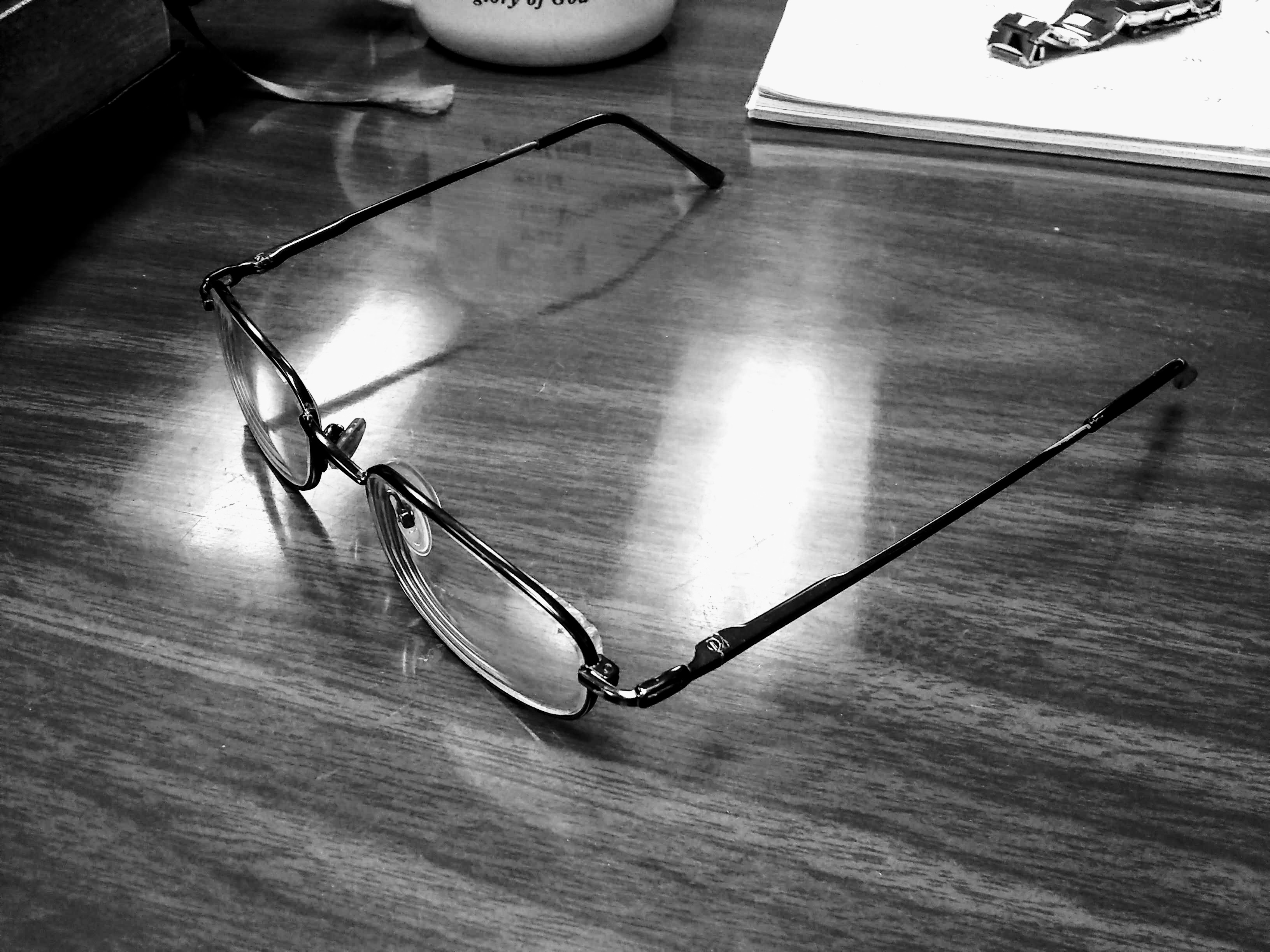
Since I was in third grade, I have worn glasses in order to correct a pernicisous case of near-sightedness. Without my glasses, my world becomes meaningless scribbles and moving blobs. With my glasses, blurry edges become sharp and dark blots become words. My glasses are the means by which I make visual sense of the world.
I became a follower of Jesus in my teenage years. From the earliest days of my discipleship, I heard pastors and leaders speaking of the need to develop a biblical worldview. Everything from public scandal to weak theology to the rise of secularism was attributed to the failure of Christians to develop a biblical view of life and the world. After many years of listening to the call to biblical worldview, I find myself both more confused about and more committed to the concept.
There is much to be confused about in the concept. In its most basic articulation, we might say that a worldview is the pair of glasses through which we make sense of the world. Things can get a little bit more fuzzy after that, and many questions abound. Is worldview primarily a thought-oriented enterprise or does it involve our emotional and pyschological shaping? Can worldviews be categorized in large, generalized categories (i.e. Marxism, secular humanism, Christianity, and other -isms) or are worldviews as unique as individuals (i.e. my way of seeing the world vs. your way of seeing the world)? Is it a list of propositions about the world or a metanarrative (a grand story) that we use to describe our experience of reality? What comes first – thoughts about the world or behaviors in the world? Many more questions can be generated, and the potential answers abound.
Yet for all of the confusion, I intuitively know that worldviews matter. We all interpret the world based on some notion of how things work. That notion or set of notions about how things work comes from our culture and upbringing and is both taught and reinforced by ritual and habit. There are big, generalized elements and personalized elements. For example, almost all Americans take for granted that food can be purchased in a store, without need to personally grow or kill what we eat. Beyond that, any given American might have had unique experiences of food in their childhood. The big picture concept (we buy what we eat) works with the personalized element (my mom made me clean my plate) to produce a way of thinking about food. I no longer conceive of worldviews as lists of propositions that are clearly held. The apologetics books of my younger days cheapened the concept by turning people into brains on sticks. Worldviews involve what we regularly do and the kind of emotional responses that we have to the world around us.
The Bible lays the groundwork for how we should think about worldviews. A biblical worldview is not primarily a list of things we think about the world but a way of living in the world that represents biblical priorities and grows out of the biblical story. In that regard, worldview is vitally connected to wisdom. Wisdom has been called the art of skillful living. To live skillfully, you have to have a grasp (not just cognitively) of how creation works and how people work and how God wants people to live in the world. This worldview-wisdom does not begin with lists of propositions but with the fear of the Lord – “The fear of the LORD is the beginning of knowledge, but fools despise wisdom and instruction” (Proverbs 1:7 NIV). A biblical worldview is also about walking in the light in fellowship with God and his people – “But if we walk in the light, as he is in the light, we have fellowship with one another, and the blood of Jesus, his Son, purifies us from all sin” (1 John 1:7). And walking in God’s light changes how we see the world. As the Psalmist says, “For with you is the fountain of life; in your light we see light” (Psalm 36:9).
The metaphor of glasses is helpful when thinking of worldviews, but I wonder if it misses something important. After all, glasses can be put on or taken off. They are always external to us. But a biblical worldview isn’t something simply believed or disbelieved, put on or off. Instead, a biblical worldview is the way I live in the world. Maybe it is more like the muscle memory that makes it possible for me to hop on my bike and ride down the street.
When my glasses are on, I can even see the trees and houses around me as I ride.
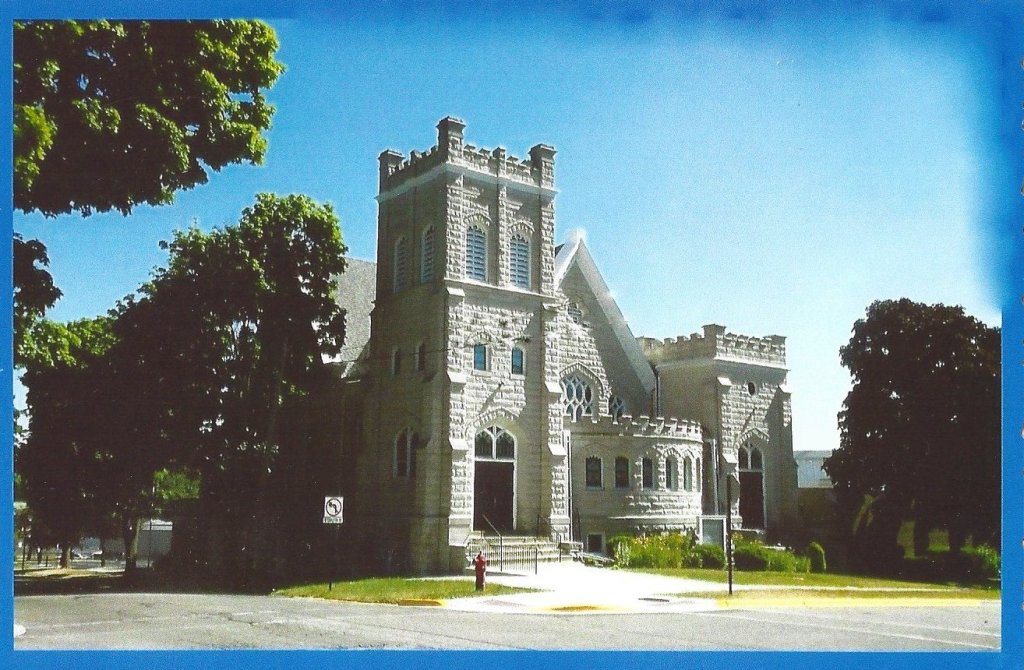


 First Presbyterian Church of Hillsdale, MI